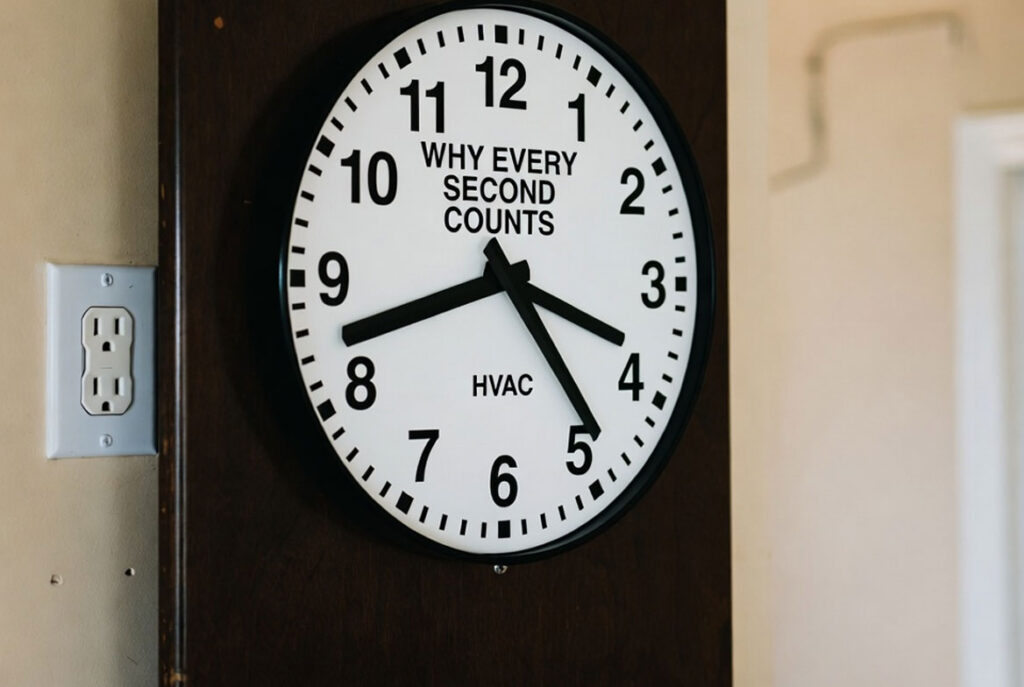
Your next customer just submitted a form on your website. The clock is ticking. In the next 5 minutes, they’ll submit the same request to three competitors. The first business to respond will win 78% of the time. Speed isn’t just important in home services—it’s everything.
Yet most businesses operate like speed doesn’t matter. They check forms once a day. They return calls “when they get around to it.” They quote jobs “within 48-72 hours.” Meanwhile, hungry competitors are eating their lunch by simply being faster.
The Psychology of Instant Gratification
Modern consumers have been trained by Amazon, Uber, and DoorDash to expect instant everything. When their AC breaks in July or their pipe bursts on Sunday, they’re not comparison shopping—they’re panic buying. The first business to respond competently wins, regardless of price.
The data on response time is staggering:
- Leads contacted within 5 minutes are 100x more likely to convert
- After 10 minutes, conversion rates drop by 400%
- 78% of customers buy from the company that responds first
- The average business takes 42 hours to respond to web leads
- 50% of leads go to voicemail and never hear back
“We implemented 60-second response times and our close rate jumped from 20% to 65%. Speed was the only thing we changed.”
– Tom Rodriguez, Lightning Response HVAC
The Compound Cost of Slowness
Being slow doesn’t just cost you that one customer. It creates a cascade of negative effects that compound over time. Lost customers don’t refer friends. They don’t leave positive reviews. They don’t become repeat buyers. Worse, they often share their frustration online, warning others away.
Consider the true cost: One missed lead due to slow response equals lost immediate revenue ($500), lost lifetime value ($5,000), lost referral value ($10,000), and potential negative review impact (immeasurable). That’s $15,000+ lost because someone checked email tomorrow instead of today.
Building a Speed-First Culture
Creating a fast-response business isn’t about working harder—it’s about building systems that make speed automatic. The fastest companies don’t rely on superhuman effort; they rely on smart processes:
Speed Systems That Actually Work:
- Auto-responders that engage within seconds
- Text notifications to on-call staff for urgent leads
- Round-robin lead distribution to available team members
- Mobile-first CRM access for field responses
- Automated booking links for common services
The Technology Stack for Speed
Speed at scale requires the right tools. Modern businesses leverage technology to be everywhere at once. Web chat with real humans, SMS automation for instant engagement, call forwarding to always-available numbers, AI-powered quote generation, and integrated scheduling systems form the backbone of rapid response.
Speed Without Sacrificing Quality
The fear is that being fast means being sloppy. The opposite is true. Fast response times indicate a well-run business. Customers interpret speed as competence, reliability, and respect for their time. Quality and speed aren’t opposites—they’re partners in creating exceptional customer experiences.
- Set speed standards (5-minute response goal)
- Measure and display response times publicly
- Reward fast responses, not just closed deals
- Use technology to enable, not replace, human speed
- Practice speed drills like emergency responders
The Competitive Moat of Speed
Here’s the beautiful thing about competing on speed: most businesses won’t do it. They’ll make excuses about quality, process, or resources. While they’re explaining why they can’t be faster, you’ll be winning their customers.
Speed is the ultimate competitive advantage because it’s visible, valuable, and surprisingly rare. In a world where customers have infinite options, being first is often better than being best. The good news? Unlike competing on price, competing on speed actually improves your margins.
Every minute you wait to respond is a minute your competitor has to win your customer. The clock is ticking on your next lead right now. Will you get there first, or will you explain to your team why another one got away?
Speed wins. Everything else is just excuses.