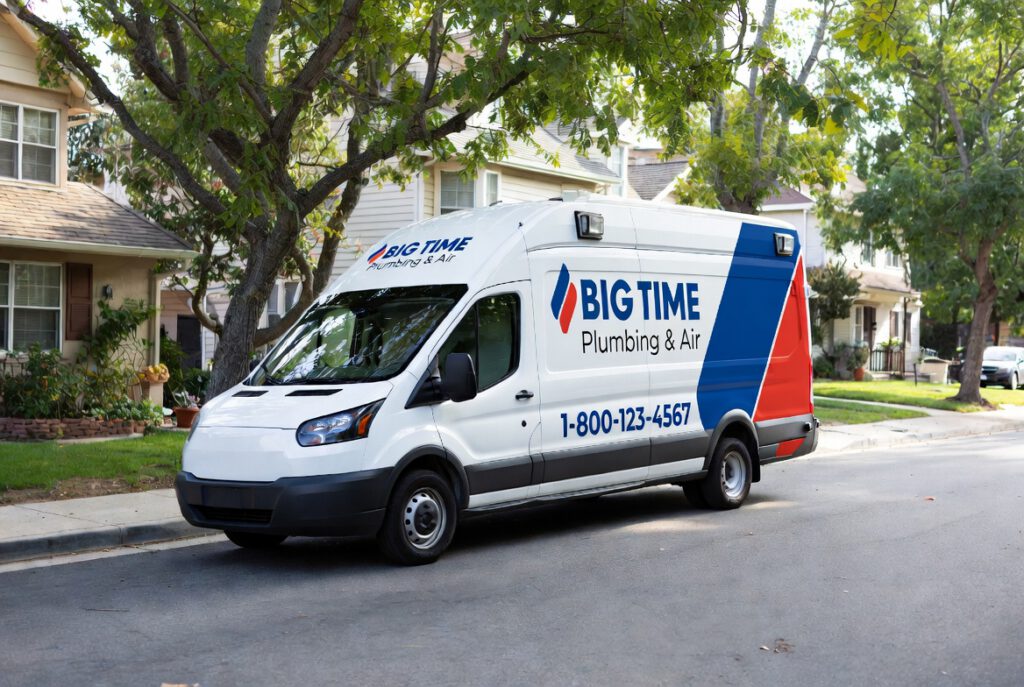
That truck wrap cost you $3,000. The billboard on Highway 45 runs $2,000 per month. You just printed 10,000 door hangers for $500. But here’s the million-dollar question: Are any of these offline marketing investments actually making you money?
Most home service businesses have no idea. They see the phone ringing and assume their offline marketing is “working,” but they can’t connect specific calls to specific campaigns. It’s like shooting arrows in the dark and hoping something hits the target. In 2024, that’s not just inefficient—it’s business malpractice.
Why Offline Marketing Still Matters
Before we dive into tracking, let’s address the elephant in the room: offline marketing isn’t dead. While everyone obsesses over digital, smart businesses know that physical marketing creates trust and visibility that pixels can’t match. A wrapped truck is a moving billboard that builds credibility. A well-placed yard sign leverages social proof. Direct mail still delivers a 5-9% response rate when done right.
The problem isn’t offline marketing—it’s the inability to measure it:
- You can’t optimize what you can’t track
- Good campaigns get cut alongside bad ones
- Budget allocation becomes guesswork
- Scaling success is impossible without data
- You’re competing blindly against data-driven competitors
“We discovered our ‘expensive’ truck wraps were generating $50,000 per month in trackable revenue. We almost cut them based on gut feeling.”
– Steve Martinez, All-Pro Electrical Services
The Bridge Between Physical and Digital
Modern tracking technology has finally bridged the gap between offline marketing and online analytics. The secret lies in creating unique digital pathways for each offline touchpoint. When someone sees your billboard and takes action, you need to capture that journey digitally.
The tools are surprisingly simple: trackable phone numbers, custom URLs, QR codes, unique promo codes, and SMS keywords. Each creates a digital fingerprint that connects offline exposure to online action.
Trackable Phone Numbers: Your Secret Weapon
Dynamic number insertion isn’t just for websites. Assigning unique trackable numbers to each offline campaign transforms guesswork into science. Here’s how to implement it strategically:
Phone Number Tracking Best Practices:
- Use memorable numbers for billboards (easy to recall while driving)
- Rotate numbers on truck wraps to track different routes/areas
- Assign unique numbers to each direct mail campaign
- Track not just volume but call quality and conversion
- Forward all numbers to your main line seamlessly
QR Codes: The Offline-Digital Bridge
QR codes have finally hit mainstream adoption. Post-2020, everyone knows how to scan them, making them perfect for bridging physical marketing to digital tracking. Smart implementation goes beyond basic scanning—it’s about creating compelling reasons to scan.
Successful QR strategies include instant scheduling access, exclusive discounts for scanners, how-to videos for common problems, virtual estimates or consultations, and maintenance reminder sign-ups. Track every scan and follow the full journey from scan to sale.
Custom URLs That Actually Get Used
Nobody types long URLs from billboards. But “YourCompany.com/Truck” or “YourSite.com/Save50”? That’s memorable and trackable. The key is making URLs that are short enough to remember, specific to each campaign, valuable enough to visit, and tracked through to conversion.
- Create campaign-specific landing pages
- Use URL shorteners with built-in analytics
- A/B test different URL structures for memorability
- Include clear value propositions in the URL itself
- Track micro-conversions, not just final sales
Attribution Models for the Real World
Here’s where most businesses fail: they track the touchpoint but not the journey. A customer might see your truck, visit your website later, then call the billboard number. Which campaign gets credit? Modern attribution modeling solves this by tracking the complete journey.
Implement multi-touch attribution that credits all touchpoints in the customer journey. Weight recent touches more heavily than older ones. Account for offline assists in online conversions. Use consistent windows (typically 30-90 days). And always validate with actual customer surveys.
Turning Data Into Dollars
Tracking is worthless without action. Once you’re capturing offline marketing data, use it to double down on winning campaigns, cut losers quickly, optimize creative based on response, test new channels with confidence, and prove ROI to stakeholders.
The businesses thriving today aren’t necessarily spending more on marketing—they’re spending smarter. They know their truck wrap generates $15 for every $1 invested. They can prove their billboard pays for itself in 3 days. They optimize offline campaigns with the same precision as Google Ads.
Your offline marketing doesn’t have to be a black box anymore. The tools exist. The methods are proven. The only question is whether you’ll keep guessing or start knowing. In a world where every dollar counts, can you really afford to market in the dark?