You check your marketing dashboards religiously. Google Ads shows a 3% conversion rate. Your website analytics report 10,000 monthly visitors. Facebook delivered 500 leads last month. These numbers look good on paper, but there’s a problem—they’re lying to you.
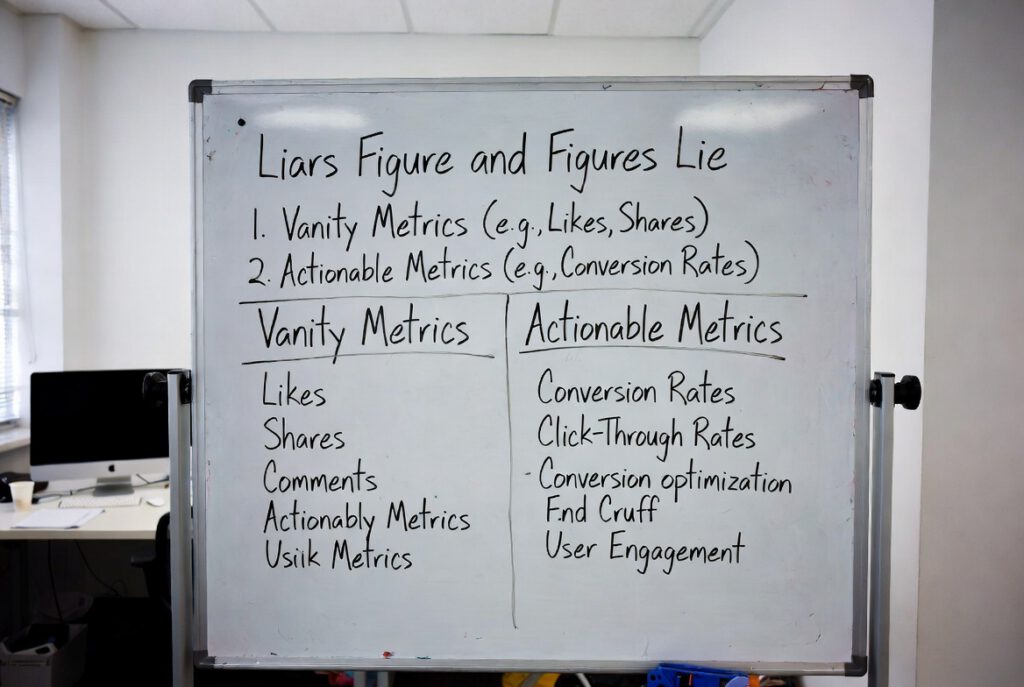
Not intentionally, of course. But as my dear friend Ken Justo of ASI Hastings once told me in a marketing meeting over 15 years ago, “Liars figure and figures lie.” That wisdom has stuck with me ever since, and it perfectly describes the metrics most home service businesses track. They tell only a fraction of the story. They measure activity, not results. They count leads, not revenue. They track the easy stuff while ignoring what actually matters: profitable customer acquisition.
The Vanity Metrics Trap
Vanity metrics are the junk food of marketing data—they taste good but provide no nutritional value for your business. Website traffic, social media followers, even lead counts fall into this category if they’re not connected to actual business outcomes.
Here’s what typically happens: You see lead volume increasing, so you assume marketing is working. But dig deeper and you might find:
- 80% of those leads are outside your service area
- Half the phone calls are price shoppers who never book
- Your “best” campaign generates leads that rarely convert
- High-volume sources produce low-value customers
“We were celebrating 1,000 leads per month until we realized only 50 were becoming customers. We were optimizing for the wrong metrics entirely.”
– Mike Thompson, Lightning Electric Services
The Metrics That Actually Matter
Real marketing intelligence focuses on metrics that directly impact your bottom line. These aren’t always the easiest to track, but they’re the ones that separate thriving businesses from those just getting by.
True performance indicators include cost per booked appointment (not just cost per lead), average ticket by lead source, customer lifetime value by campaign, speed to contact by channel, and actual ROI by marketing investment.
Why Traditional Tracking Fails
The disconnect happens because marketing platforms and business management systems speak different languages. Google knows someone clicked your ad. Your CRM knows someone booked a job. But connecting those dots requires intentional integration that most businesses never set up.
Common Tracking Failures:
- Phone calls not attributed to the correct marketing source
- Form fills tracked but not connected to customers
- Revenue data trapped in ServiceTitan or QuickBooks
- No visibility into customer lifetime value
- Offline conversions not fed back to ad platforms
Building a Truth-Based Tracking System
Creating accurate marketing measurement isn’t rocket science, but it does require intentional setup and the right tools. Start by identifying your true north star metric—for most home service businesses, it’s cost per acquired customer or return on ad spend.
Next, map out your entire customer journey from first touch to final invoice. Where are the gaps in your tracking? What systems need to talk to each other? This exercise alone often reveals massive blind spots in current measurement.
The Competitive Advantage of Truth
When you start optimizing based on real business metrics rather than vanity metrics, magical things happen:
- Marketing waste drops by 30-50%
- Customer quality improves dramatically
- Scaling becomes predictable and profitable
- Team alignment improves around clear goals
- Decision-making becomes data-driven, not gut-driven
Making the Shift Today
The transition from vanity metrics to value metrics isn’t just a technical upgrade—it’s a fundamental shift in how you think about marketing. It requires admitting that some of your “successful” campaigns might actually be losers, and some “expensive” channels might be your most profitable.
But here’s the thing: Your competitors are likely still flying blind, optimizing for leads instead of profits. By focusing on the metrics that matter, you gain an insurmountable advantage in efficiency and growth potential.
Ken was right all those years ago—figures can lie when we let them. Stop letting misleading metrics guide your marketing decisions. It’s time to see through the lies and build your strategy on the foundation of truth. Your bottom line will thank you.